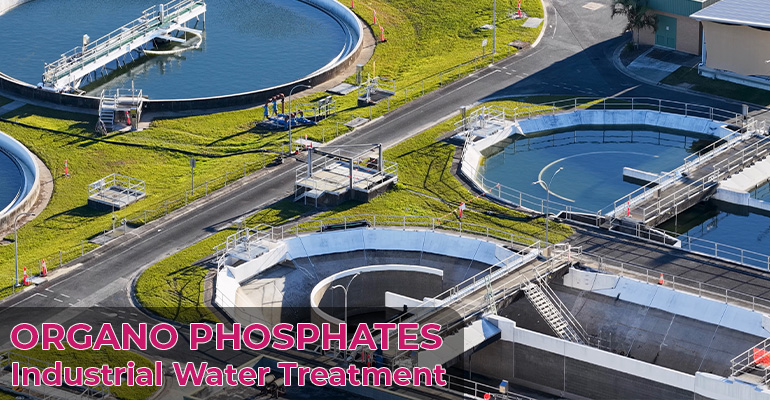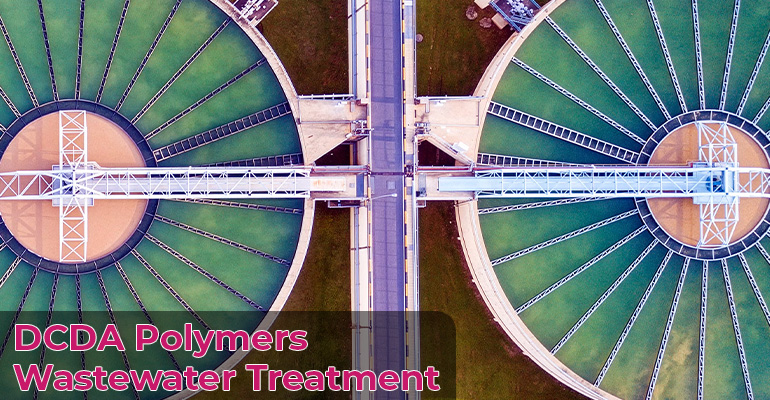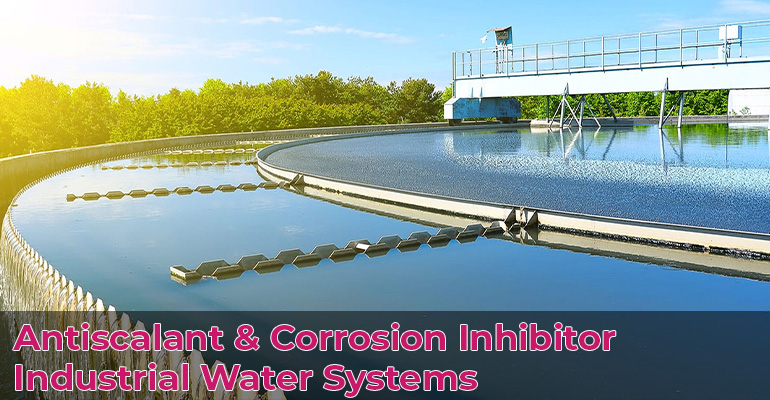
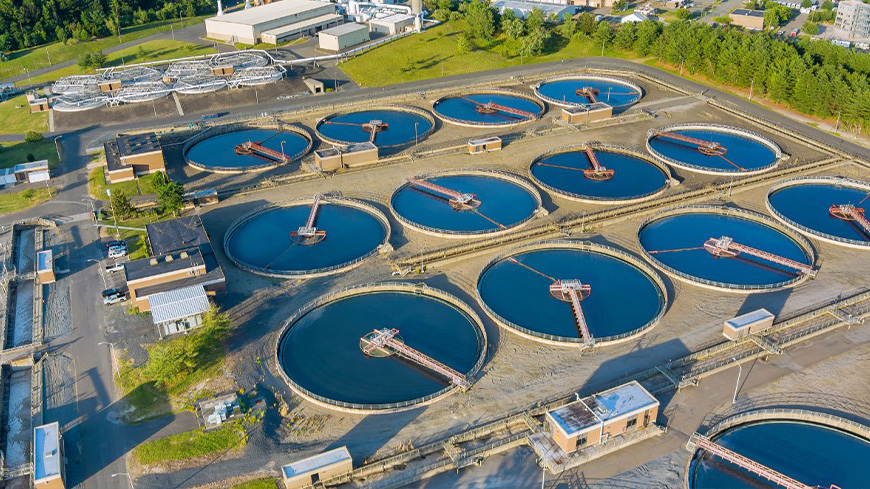
Water treatment in industrial applications is an important process. Water can be used for cooling, cleaning, manufacturing and processing. Throughout these processes, water can become contaminated with dissolved minerals, suspended solids and chemical compounds...
Polymers in Industrial Water Treatment: Types, Uses and Benefits
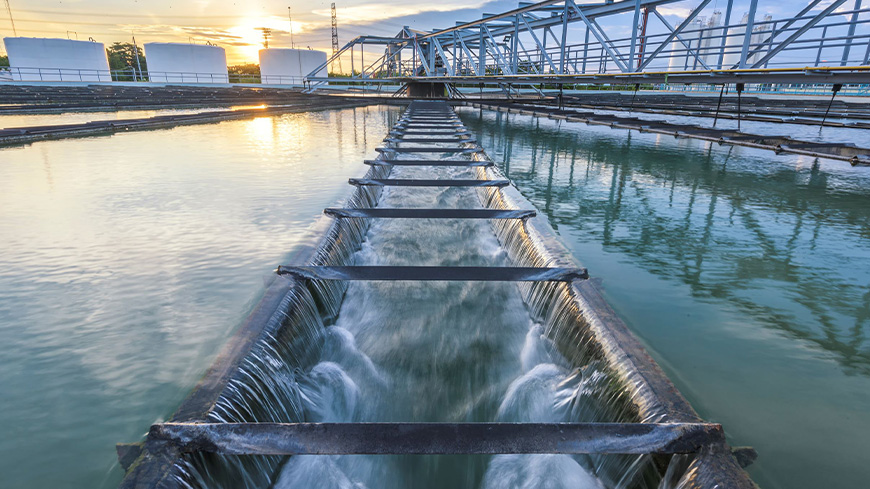
The polymers can be extremely efficient in water treatment. The problem with contamination of water during the industrial production process is common. These impurities can be present in the form of solids, solutes, oils and other impurities.
If the effect of impurity on yield, efficiency of the equipment and wastewater quality is not significant then the impurity removal issue becomes complicated. In this situation, the application of polymers can be helpful.
Plastics are extremely useful in industry. The plastics are used in many ways in industry such as for the manufacturing of plastics, coatings, adhesives, resins and other special chemical formulation.
There are different types of polymers. They can differ a lot from each other.
Some specific polymers can be used for the removal of solids. Some specific polymers can be used for the prevention of deposits and dispersion. Formulations for industrial use can be improved using the right polymers.
The size of polymers can differ depending on their molecular weight, charge, solubility and chemical composition.
Learn the characteristics of the polymers in order to choose the suitable polymer for your process. Study every polymer carefully.
This article is about the polymers. The overview of different types of polymers , their properties, applications, advantages and so on. I hope this helps clarify polymers.
What are Polymers?
Polymers are a type of long chain molecules formed from a chain of individual units (called monomers). Polymers are very interesting.
These monomers sequentially attach to build long chain (or complex) molecules.
Polymers are created by polymerisation.
The types of polymers can have varied chemical and physical properties, depending on the monomer they are made from and the manufacturing process. Polymers are made from different monomers.
Some are natural polymers, and others are synthetic polymers.
Natural Polymers
- Cellulose
- Starch
- Proteins.
Synthetic Polymers
- Polyethylene
- Polypropylene
- Polyacrylamide
Special Polymers
In water treatment, polymers may be used to help control coagulation and flocculation, dispersion and scale control.
Depending on the type of polymer (chemical composition, molecular weight, charge density) and conditions, polymers will have different applications. Polymers can be designed to meet conditions.
Not all polymers are going to be suitable within water treatment. Another product may be needed. So, it is recommended to select the appropriate polymer.
Polymers Chemistry
The polymer chemistry is understood when it is easy to determine the right applications of polymers. When the polymer chemistry is understood, it is easier to determine the right applications.
While polymers are the long chains of repeating units, the molecules can differ.
Monomer
The properties of a polymer will differ with the type of monomer used.
Some polymers are: soluble depending on which monomer is used, flexible, charged and chemically resistant.
Polymer Chain Architecture
Chemical bonding between monomers forms polymer chains.
If the bonding of the monomers occurs in a certain way the polymers may be linear, branched or cross linked.
Polymer structure explains some different properties may be shown by polymers.
Molecular Weight
Polymers have different weights.
Polymer can have a light molecular weight, or very long chains. There are short and long polymers.
Polymer molecular weight can influence solubility, viscosity, physical properties, and type of use. Molecular weight matters.
Functional Groups
Polymers can also have groups that interact with other material.
Certain polymers used in water treatment do possess charged functional groups.
These enable interface interaction with suspended solid, soluted ions and various substances in water.
Charge
Some polymers are having charge some polymers are having negative charge certain polymers are non-ionic means they are not having permanent ionic charge.
The awareness of the charge of a polymer is a key factor to consider in water treatment. This is due to the interactions with the particles in the water and the chemical behaviour.
Polymer Types
Polymers can be classified by:
- Origin
- Chemical structure
- Charge
- Use
1) Polymers
Polymer can be natural, in living beings and natural things.
- Cellulose
- Starch
- Proteins
- Natural Rubbers
- Chitosan
Some natural polymers and derivatives may be employed for some processes. Modified polymers can be looked at in water treatment.
Chemistry is a consideration and polymers may be appropriate.
2) Synthetic Polymers
Polymer is produced through chemical reactions. Typical areas of use include plastics, packaging, coatings, adhesives, textiles and chemical formulations for industry. These are all produced through chemical reactions involving polymers.
- Polyethylene
- Polypropylene
- Polyacrylamide
- Acrylic.
In particular, synthetic polymers can be used for water treatment.
Enabling the polymers to clarify, control deposits, or disperse coatings The polymers may be applied to improve the clarity of water.
3) Cationic Polymers
Contain charged functional groups.
The procedure of coagulation during the treatment of water includes cationic polymers with charged suspended particles.
It can also result in destabilization of the particles, leading to the coagulation and flocculation. Polymers will make particles to agglomerate.
Use of cationic polymers for some wastewater treatment and sludge conditioning. Works perfectly with proper charge density, molecular weight and dosage and water composition. I have used polymers.
4) Anionic Polymers
Anionic polymers have functional groups with negative charge. It can be used during the water treatment as a flocculant. Anionic polymers can also be used as a dispersant or as a scale control agent. I have seen the use of anionic polymers in these purposes.
Effectiveness of anionic polymers depends on their structure and type of treatment. Not interchangeable of anionic polymers with each other. Some products can be used for the flocculation and dispersion of the anionic polymer. But I have seen that it is impossible to interchange anionic polymers.
5) Non-Ionic Polymers
Do not have charge under conditions of their use. -ionic polymers can be useful where it is not needed to have a charge.
Some -ionic polymers can be used in the formulations or treatments of water. I have used -ionic polymers in formulation.
The interactions of -ionic polymers with other chemicals might be dependent on molecular weight, solubility and other chemical capabilities. I observe interactions are ML dependent as well as on solubility.
6) Amphoteric Polymers
Have positive and negative charges. The properties of the amphoteric polymers will depend on the pH and chemical composition around the polymer. I saw that amphoteric polymers would respond to pH changes.
Some amphoteric polymers are usable in formulations and in the water treatment. The question of the relevance of the use of polymers in a process must be posed. The amphoteric polymers can be very interesting if they are well selected.
Main Applications in Industry
There are a lot of different industry applications for polymers because of the wide range of chemical and physical properties of the material. You can see the different industry applications depending on the type of polymer and what’s needed in manufacturing. Polymers are extremely versatile.
1) Water Treatment
I have seen many impurities in water. Impurities may be: in industrial water Soluble minerals and other impurities may be suspended solids with the water. Water treatment with polymer Depending on the polymers formulation I have seen many impurities in water.
- Improve Coagulation
- Improve Flocculation
- Improve Clarity
- Eliminate Suspended Solids
- Disperse Particles
- Control Scaling
- Condition Sludge
Different types of polymers may be required depending on the application. If a flocculant is used to agglomerate suspended particles, this polymer could be unsuitable where dispersion of the suspended particles is desired. We recommend the appropriate type of polymer for the specific application.
2) Wastewater Treatment
There may also be substances, suspended solids, coloured substances, and other impurities in the industrial wastewater. I have seen high proportion of substances in wastewater.
Some polymers can be used to improve the separation of the particles. If you use a flocculent polymer then the small particles will flocculate I have used polymers to separate particles.
These particles may be separated from the aqueous phase using techniques such as sedimentation, flotation or filtration. Cationic polymers can be utilised to destabilise charged impurities. Cationic polymers are in fact effective at destabilising charged impurities.
The response of polymers will vary with the wastewater composition, polymer as well as conditions and properties.
3) Cooling Water Treatment
Cooling Water Treatments Manufacturing Plants Energy & Industrial Processes I work with cooling water treatments.
Growth, scale, and particulate/ deposition:There may be problems with scale, particulate and deposition. Scaling and deposition are common.
Dispersant polymers and acrylic polymers can be employed as pretreatment in cooling water treatment. I have employed dispersant polymers as pretreatment in cooling water treatment.
All three have in common that they can be used for scale control and general deposition control for particulate matter. Dispersant polymers and acrylic polymers and are used to control particulate matter. They do control particulate matter.
Polymer performance is influenced by the water chemistry, temperature of the system, the dosage and the compatibility of the chemical with the treatment chemicals. To be honest I have observed that polymers are very much affected by the chemistry of water.
Polymers can be added to the treatment process with chemicals in order to treat cooling water completely. Chemicals are used with polymers.
4) Water Treatment for Boilers
Water quality in a boiler is vitally important. Vitally important: Water quality in a boiler.
Deposits can result from the deposition of soluble minerals and impurities in the water. Deposits may result from mineral dissolution.
Water soluble polymer can be used in boiler water treatments for deposition control as well as removal of impurities. I use water polymers to control deposition.
A simple guide to selecting polymers for boiler water treatment Chemistry and treatment conditions pressure, temperature and water chemistry. Pressure and temperature must be considered.
Not all polymers may be suitable in a boiler. Not all polymers may be suitable.
5) Paper and Pulp Industry
Polymers are used in the pulp and paper industry.
Some polymers are also used as retention aids, drainage aids, flocculants or as specific chemical formulations. I have used polymers for retention aid purposes.
I am able to use suitable polymers for process water treatments which can be used to control suspended solids. I use polymers for suspended solids control.
Polymer performance is governed by fibre type, water chemistry and process conditions. Metal removal is dependent on fibre type.
6) Textile Industry
The textile industry is involved in many water intensive processes.
Dyes, solids in suspension, surfactants and other chemicals might be in the effluent. I have seen surfactants and dyes in the effluent.
Certain polymers may be employed in wastewater treatment to enhance coagulation, flocculation and clarity. I employ polymers for coagulation and clarity.
Specialist polymer formulations may be used to remove the dyes. I consider the specialist polymers.
Polymer Performance depends on the type of dye.
7) Oil & Gas Industry
Polymers in Oil & Gas I use polymers in the oil and gas industries.
Specific polymeric chemicals can be used in drilling fluids, enhanced oil recovery and industrial water treatment. I have used chemicals in drilling.
Polymer can be added to change viscosity, reduce losses, or for a particular processing need. I can add polymer to change viscosity.
The thermoplastics will also be selected based on temperature, salinity and chemical compatibility. Temperature and salinity need to be taken into account.
8) Chemical Production
Polymers may be employed during the manufacturing of fine chemical substances.
Polymers either the final product, an intermediate or existing in a formulation.
Certain polymers are intentionally engineered for dispersing and thickening, adhering and surface alteration. Polymers are custom designed for dispersing and adhering.
The specifications also depend on the application. Specifications vary according to application.
Polymers are also used in coatings, paints, sealants and adhesives and can alter properties such as film characteristics, adhesion, flexibility and many other material properties. Acrylic based polymers, polyurethane based polymers and others all have their place in these applications. These are completely different from the water treatment applications! Very different but equally necessary!
Role of Polymers in Water Treatment
Different Types of Water Treatment Possible applications of polymers according to the type of polymer.
Encourage agglomeration or prevent agglomeration/deposition.
Charge Neutralisation
Certain cationic polymers are capable of interacting with charged suspended particles. If the particles are charged, they may not form an agglomerate. Introducing this kind of polymer can decrease particle repulsion.
Particles might clump together (agglomerate) and therefore be easier to eliminate.
Bridging
When polymers are large and heavy, then bridling can occur. A polymer chain can bridge particles together to form large flocs. This process is usually referred to as flocculation. Flocs are very easy to removed from water.
Dispersion
Other dispersant polymers that act in contrast to flocculants Dispersant polymers are unable to promote coagulation by inducing the agglomeration of particles, but instead they can keep small particles in dispersion. This can stop some particles from being deposited. Dispersant polymers are present in cooling water and process industrial water.
Scale Control
Polymers can either inhibit crystal growth, change the nature of the crystal or keep the particles formed in dispersions. Each polymer will inhibit different minerals as this varies with the type of polymer.
Sludge Conditioning
Other polymers are capable of aiding conditioning and drying. Polymers may promote agglomeration of the sludge. It can be easier to remove the water using equipment if it is easier to form it into clusters – a proper polymer will be selected based on the type of sludge and dewatering method.
Important Polymers Used in Industrial Water Treatment
Several polymer families are relevant to industrial water and wastewater treatment.
Polyacrylamide Polymers
Polyacrylamide-based products are used in selected flocculation and solid-liquid separation applications.
They may be available in anionic, cationic or nonionic forms.
Different grades have different molecular weights and charge characteristics.
Their suitability depends on the treatment objective.
Acrylic Polymers
Acrylic polymers include products associated with acrylic acid and related monomers.
Certain water-soluble acrylic polymers are used in industrial water treatment as dispersants and scale-control additives.
Their performance depends on molecular weight, composition and treatment conditions.
Polyamines
Certain polymeric Polyamines are used as cationic coagulants.
They can interact with negatively charged suspended particles and support clarification.
Different Polyamine formulations may have different charge densities and treatment characteristics.
Epi-DMA Polymers
Epi-DMA Polymers are associated with epichlorohydrin and dimethylamine chemistry.
Certain Epi-DMA products are used as cationic coagulants in water and wastewater treatment.
They may be evaluated for suspended solids removal and clarification.
DCDA Polymers
DCDA Polymers are associated with dicyandiamide chemistry.
Certain formulations are used in industrial wastewater treatment, particularly for colour reduction and coagulation.
They may be relevant to selected textile and dye-containing wastewater streams.
Dispersant Polymers
Dispersant polymers are designed to help keep certain particles dispersed in a liquid system.
They may be used in cooling water treatment and other industrial applications where deposit control is important.
Their function differs from polymers designed primarily for coagulation and flocculation.
Conclusion
Polymers are an important group of materials used across industrial chemistry, manufacturing and water treatment.
Their chemical structures allow them to perform different functions, including coagulation, flocculation, dispersion, scale control and sludge conditioning.
Certain polymers are particularly useful in industrial water and wastewater treatment because they can help manage suspended particles, improve clarification and support deposit control.
However, different polymers have different properties and applications.
Industrial buyers should evaluate water characteristics, treatment requirements, product specifications and chemical compatibility before selecting a polymer.
Laboratory testing and appropriate process monitoring can help determine whether a product is suitable for the intended application.
Working with a specialty chemical manufacturer or supplier can help businesses identify polymer products that meet their industrial requirements.
Frequently Asked Questions About Polymers
1. What are Polymers?
Polymers are large molecules made from repeating structural units called monomers. They may be natural or synthetic and are used in many industrial applications.
2. What are Polymers used for in industrial water treatment?
Certain polymers are used for coagulation, flocculation, clarification, sludge conditioning, dispersion and scale control.
3. What are the main types of Polymers?
Polymers can be classified as natural or synthetic. In water treatment, they may also be grouped as cationic, anionic, nonionic or amphoteric polymers.
4. How do Polymers work in wastewater treatment?
Some polymers help destabilise suspended particles or form larger aggregates. These aggregates can become easier to remove through settling, flotation or filtration.
5. Are Polymers used in cooling water treatment?
Yes. Certain dispersant and acrylic-based polymers are used in cooling water treatment programmes to help manage deposits and scale formation.
6. What is the difference between flocculant and dispersant Polymers?
Flocculant polymers help particles form larger aggregates. Dispersant polymers are generally used to help maintain the dispersion of particles and reduce certain deposits.
7. What factors affect Polymer performance?
Important factors include molecular weight, charge density, water pH, temperature, chemical dosage, water composition and mixing conditions.
8. Can Polymers improve sludge dewatering?
Certain polymeric flocculants are used to condition sludge and support water separation during dewatering.
Related Posts