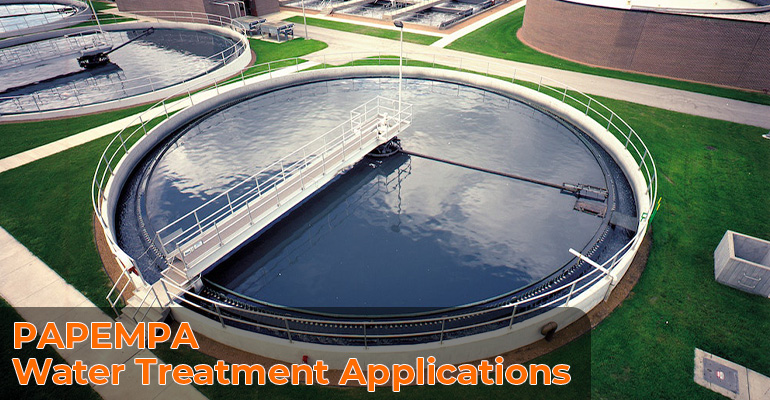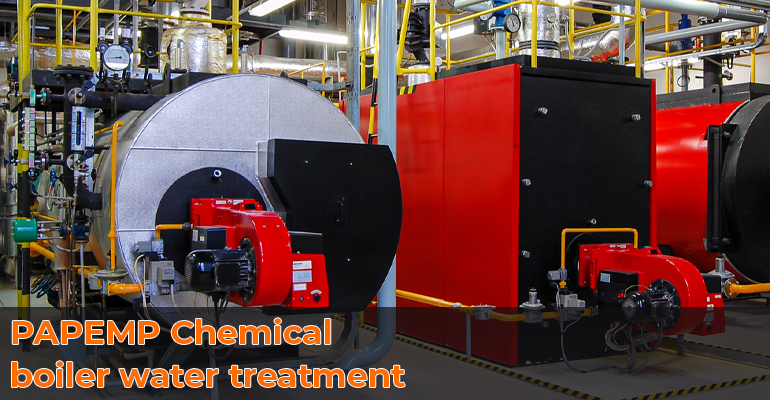
PAPEMP, also known as Polyamino Polyether Methylene Phosphonic Acid, is a specialty organophosphonic acid used in industrial water-treatment and other demanding chemical formulations. Its combination of scale inhibition, sequestration, dispersion, threshold inhibition, corrosion-control support, and hydrolytic stability makes it useful in applications where conventional treatment chemistry may need additional performance under challenging operating conditions. For companies sourcing PAPEMP regularly, choosing a reliable Polyamino Polyether Methylene Phosphonic Acid manufacturer and supplier is important for maintaining consistent product quality, dependable availability, and smoother production planning...
PAPEMP Phosphonate Chemicals: A Practical Guide for Industrial Applications
 PAPEMP phosphonate chemicals are one such group of specialty treatment chemicals. PAPEMP stands for Polyamino Polyether Methylene Phosphonic Acid and is used in industrial formulations where metal-ion control, mineral management, dispersion, and formulation stability are important.
Unlike a chemical selected for only one specific function, PAPEMP can provide several useful characteristics within a treatment formulation. This makes it interesting for industries dealing with complex water chemistry or processes where mineral particles need to remain under control.
The actual performance of PAPEMP depends on the application, dosage, water composition, temperature, pH, and other ingredients used alongside it. Therefore, understanding the chemical before selecting a grade is important for achieving consistent industrial results.
What are PAPEMP Phosphonate Chemicals?
PAPEMP is the commonly used abbreviation for Polyamino Polyether Methylene Phosphonic Acid, an organophosphonic compound used in different industrial chemical formulations. Its molecular structure contains phosphonic acid functionality along with amino and ether components, giving it several interaction points with dissolved metal species and mineral particles.
The chemical can be considered when an industrial system needs better control over substances such as calcium, magnesium, iron, and other metal ions. Instead of allowing these components to freely participate in reactions that may produce unwanted deposits, PAPEMP can interact with them and influence their behavior within the system.
This characteristic is particularly useful in applications where water is repeatedly circulated or concentrated. As water evaporates or passes through different process stages, dissolved materials can become more concentrated. If the concentration becomes too high, mineral precipitation may occur.
PAPEMP can be incorporated into a suitable treatment program to help manage these conditions. Its role can vary from one formulation to another, so application-specific testing is recommended before deciding the final concentration.
For industrial buyers, the terms PAPEMP phosphonate chemicals Supplier and PAPEMP phosphonate chemicals Manufacturer are often used when searching for companies that can provide this specialty chemical with consistent quality and suitable technical documentation.
Features of PAPEMP Phosphonate Chemicals
1. Multi-Functional Phosphonate Chemistry
PAPEMP provides a combination of phosphonate, amino, and ether-related chemical functionality. This gives it a broader interaction profile than a simple single-function additive. It can therefore be evaluated in formulations where metal-ion management, mineral control, and particle behavior need to be addressed within the same treatment approach.
2. Strong Interaction With Metal Ions
The chemical structure of PAPEMP allows it to interact with various dissolved metal species. This property can be useful in systems containing calcium, magnesium, iron, or other metals that may interfere with industrial processes. Its effectiveness depends on concentration, water chemistry, temperature, and the specific ions present.
3. Supports Mineral Control
PAPEMP can be used in treatment programs designed to influence mineral precipitation and deposit development. Rather than physically removing dissolved minerals, it can affect their chemical behavior. This makes it useful for applications where maintaining controlled water chemistry is more practical than continuously removing mineral content.
4. Useful Dispersion Characteristics
Fine particles can become problematic when they join together and settle or attach to equipment surfaces. PAPEMP can be evaluated for its ability to support better particle dispersion in suitable systems. This characteristic can contribute to smoother handling of mineral-containing process streams and treatment formulations.
5. Suitable for Demanding Industrial Conditions
Industrial processes may involve elevated temperatures, changing pH levels, high mineral content, or continuous circulation. PAPEMP is considered for formulations operating under such conditions because phosphonate chemistry can provide useful stability and treatment performance. Actual suitability should always be confirmed under representative process conditions.
6. Flexible Application Potential
PAPEMP is not restricted to one industrial sector. Its chemical properties allow it to be investigated in water treatment, cleaning formulations, mineral processing, textiles, paper-related processes, and other applications. This flexibility makes it a useful ingredient for manufacturers developing specialty chemical formulations for different customers.
7. Useful in Combination Formulations
PAPEMP can be evaluated alongside other compatible treatment chemicals to create a more complete formulation. Depending on the application, it may be combined with dispersants, scale-control ingredients, corrosion inhibitors, or other supporting chemicals. Compatibility testing is important to maintain formulation stability and predictable performance.
PAPEMP and Changing Water Conditions
One of the biggest challenges in industrial water treatment is that water chemistry does not remain constant.
A cooling-water system, for example, may experience changes in mineral concentration as water evaporates. Fresh makeup water can also change the balance of dissolved salts. Temperature variations can further influence the way minerals behave.
These changes can make treatment more difficult.
PAPEMP can be evaluated as part of a treatment strategy designed to handle changing chemical conditions. Its interaction with metal ions and mineral particles can help formulators develop a more controlled approach to deposit management.
However, continuous monitoring remains important. A chemical treatment cannot compensate for every sudden change in water quality.
Regular analysis allows operators to identify changes early and adjust the treatment program when required.
Why Supplier Quality Matters
For industrial manufacturers, consistency is just as important as chemical performance.
If the characteristics of a raw material change from one batch to another, the final treatment formulation may behave differently. This can create difficulties for production teams and customers using the finished product.
A dependable PAPEMP phosphonate chemicals Manufacturer should therefore maintain appropriate quality-control procedures and provide relevant product documentation.
Buyers should review technical specifications, safety information, batch details, packaging standards, and storage recommendations before placing regular orders.
For large-volume applications, supply capacity also matters. A product that performs well during a small trial is only useful commercially if it can be supplied consistently when production requirements increase.
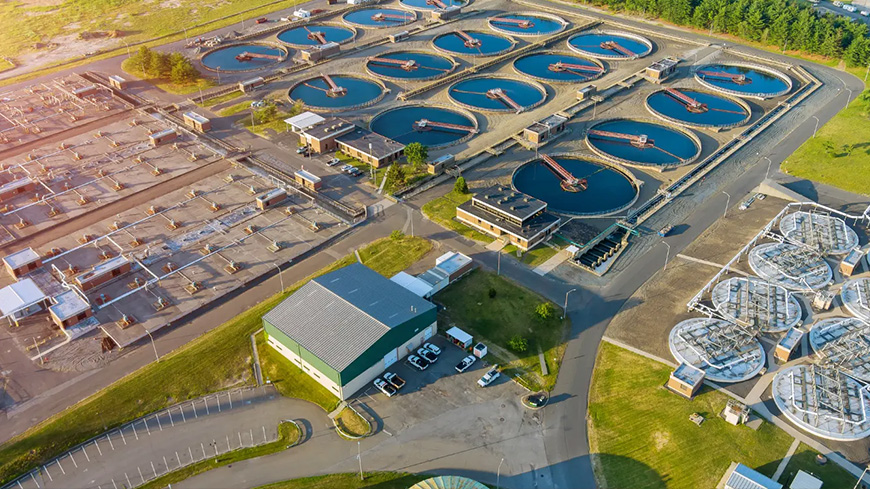 Benefits of PAPEMP Phosphonate Chemicals
1. Helps Manage Scale Formation
PAPEMP can support treatment programs designed to reduce the development of unwanted mineral deposits. By interacting with scale-forming substances and influencing their behavior, it can help maintain cleaner process conditions. The actual level of scale control depends on mineral composition, temperature, pH, dosage, and the design of the treatment system.
2. Supports Metal-Ion Control
Uncontrolled metal ions can interfere with water chemistry and industrial formulations. PAPEMP provides a way to influence the behavior of selected metal species through phosphonate chemistry. This can help formulators maintain more stable conditions when calcium, magnesium, iron, or other metals are present in the process.
3. Can Improve Process Stability
Mineral particles and dissolved metals can cause changes in water quality over time. Including PAPEMP in an appropriate formulation may help maintain a more predictable chemical environment. Better control of these components can support smoother process operation and reduce some problems associated with uncontrolled mineral deposition.
4. Useful for Complex Water Chemistry
Some industrial systems contain several different mineral-forming substances at the same time. PAPEMP can be evaluated in these more complicated environments because its molecular structure provides multiple opportunities for chemical interaction. This gives formulators another option when a simple treatment approach is not sufficient.
5. Supports Cleaning Formulations
Metal residues and mineral deposits can reduce the effectiveness of cleaning processes. PAPEMP can be incorporated into selected cleaning formulations to help manage metal-ion interactions and support more consistent cleaning conditions. Its suitability depends on the cleaner’s pH, surfactant system, target surface, and other formulation components.
6. Provides Formulation Flexibility
PAPEMP can be tested at different concentrations and alongside compatible ingredients to create treatment products for specific industrial needs. This flexibility allows manufacturers to adjust formulations based on water quality, mineral loading, operating temperature, and desired treatment performance rather than using one fixed recipe.
7. Can Support Equipment Protection
Mineral deposits can accumulate on pipelines, heat-transfer surfaces, and other equipment. A suitable PAPEMP-based treatment program may help control the chemical conditions that encourage such deposits. By supporting better mineral management, the chemical can contribute to cleaner operating surfaces and potentially reduce deposit-related maintenance requirements.
Laboratory Testing Before Full-Scale Application
Laboratory evaluation is particularly valuable when introducing Polyamino Polyether Methylene Phosphonic Acid into a new process.
A representative sample of process water can be used to examine how the chemical behaves under controlled conditions.
Testing can include mineral precipitation, particle dispersion, compatibility, storage stability, and performance at different concentrations.
Temperature and pH can also be adjusted to resemble actual operating conditions.
If the laboratory results are satisfactory, a controlled field trial can provide additional information before full-scale implementation.
This staged approach can help reduce unnecessary chemical consumption and identify potential compatibility issues early.
Conclusion
PAPEMP phosphonate chemicals provide a versatile option for industrial formulations where mineral control, metal-ion management, dispersion, and process stability are important.
The chemical is based on Polyamino Polyether Methylene Phosphonic Acid and can be evaluated across different industrial applications depending on the treatment objective. Its value comes from its ability to interact with mineral-forming substances and metal ions rather than simply removing them from the process.
However, successful application depends on the complete system. Water composition, temperature, pH, mineral concentration, dosage, and compatibility with other chemicals all influence the final result.
For this reason, laboratory testing and controlled field evaluation should be considered before large-scale use.
Businesses looking for a PAPEMP phosphonate chemicals Supplier in India or PAPEMP phosphonate chemicals Manufacturer in India should also assess product consistency, technical documentation, supply reliability, and application support.
Choosing the right supplier and validating the chemical under real operating conditions can help manufacturers develop a more dependable and cost-conscious treatment program.
FAQs
1. What are PAPEMP phosphonate chemicals used for?
PAPEMP phosphonate chemicals are used in industrial formulations where scale control, metal-ion management, dispersion, and water chemistry control are required. Depending on the formulation, PAPEMP can be considered for water treatment, cleaning products, mineral-processing systems, textile processes, paper-related applications, and other industrial environments.
2. Is PAPEMP the same as Polyamino Polyether Methylene Phosphonic Acid?
Yes. PAPEMP is the commonly used abbreviation for Polyamino Polyether Methylene Phosphonic Acid. Some suppliers and industries may also use PAPEMPA or PAPEMP Chemical when referring to the same general phosphonate chemistry. Buyers should always verify the exact product specification and concentration before purchase.
3. Can PAPEMP help with mineral deposits?
PAPEMP can be incorporated into suitable treatment formulations designed to influence mineral precipitation and deposit development. It can interact with certain metal ions and mineral particles, helping treatment programs maintain better control over scale-forming substances. The final performance depends on water chemistry, dosage, temperature, and application conditions.
4. How should I select a PAPEMP grade?
Start by identifying the application, water chemistry, target mineral problem, operating temperature, pH, and required treatment concentration. Then review the supplier’s technical specification and conduct a laboratory trial. This approach helps determine whether the selected PAPEMP grade is appropriate for the intended industrial system.
5. Can PAPEMP be mixed with other treatment chemicals?
PAPEMP may be used alongside compatible treatment ingredients, but compatibility should be tested before commercial formulation. Acids, alkalis, surfactants, dispersants, corrosion inhibitors, and other phosphonates can influence the stability or performance of the final product. Laboratory testing is recommended before combining multiple active chemicals.
6. Where can I find a PAPEMP phosphonate chemicals Supplier in India?
Companies looking for a PAPEMP phosphonate chemicals Supplier in India should compare suppliers based on product quality, specifications, documentation, packaging, supply capacity, and technical support. Maxwell Additives PVT LTD can be approached for information about PAPEMP product specifications, availability, and industrial supply requirements.
7. What should I ask a PAPEMP phosphonate chemicals Manufacturer?
Before purchasing, buyers should ask about product concentration, technical specifications, batch consistency, storage conditions, packaging, safety documentation, minimum order quantity, delivery schedule, and application suitability. A PAPEMP phosphonate chemicals Manufacturer should be able to provide the relevant information needed for technical evaluation and commercial procurement.
8. Is PAPEMP suitable for high-temperature industrial applications?
PAPEMP can be considered for applications where elevated temperatures are part of normal operation, but suitability should be confirmed under the actual process conditions. Temperature, pH, mineral concentration, residence time, and other formulation ingredients can influence performance, so representative testing is recommended.
9. Why is laboratory testing important before using PAPEMP?
Laboratory testing shows how the chemical behaves with the actual water or process material instead of relying only on general product information. It can help determine dosage, mineral-control performance, compatibility, and formulation stability. The results provide a stronger basis for deciding whether PAPEMP should be introduced into a full-scale industrial process.
Related Posts