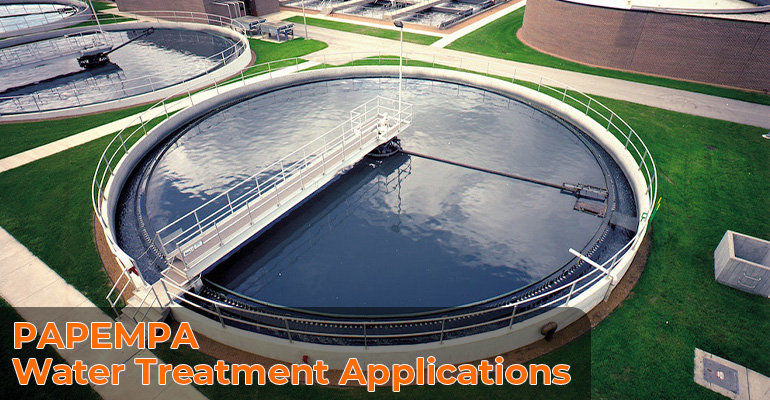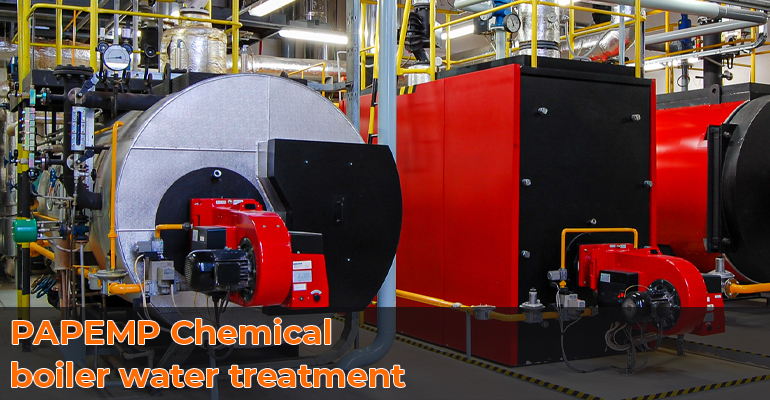
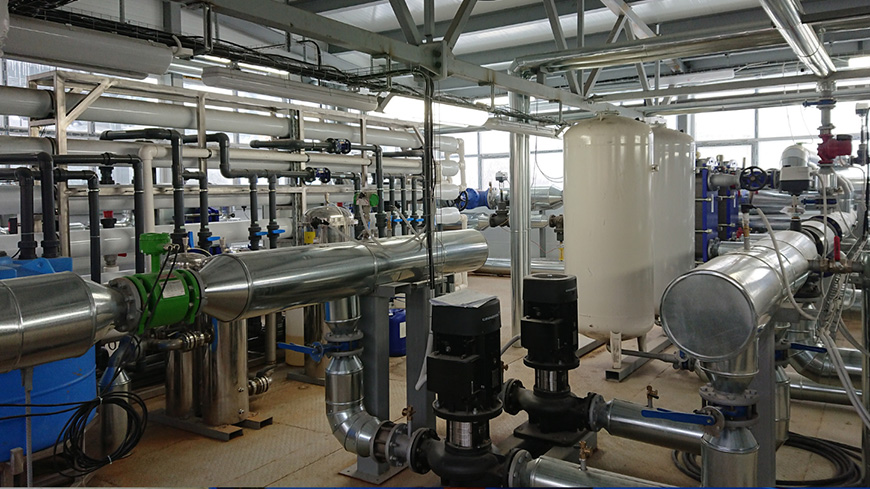
PAPEMP, also known as Polyamino Polyether Methylene Phosphonic Acid, is a specialty organophosphonic acid used in industrial water-treatment and other demanding chemical formulations. Its combination of scale inhibition, sequestration, dispersion, threshold inhibition, corrosion-control support, and hydrolytic stability makes it useful in applications where conventional treatment chemistry may need additional performance under challenging operating conditions. For companies sourcing PAPEMP regularly, choosing a reliable Polyamino Polyether Methylene Phosphonic Acid manufacturer and supplier is important for maintaining consistent product quality, dependable availability, and smoother production planning...
PAPEMP Polyamino Polyether Methylene Phosphonic Acid (PAPEMPA): Industrial Applications and Selection Guide
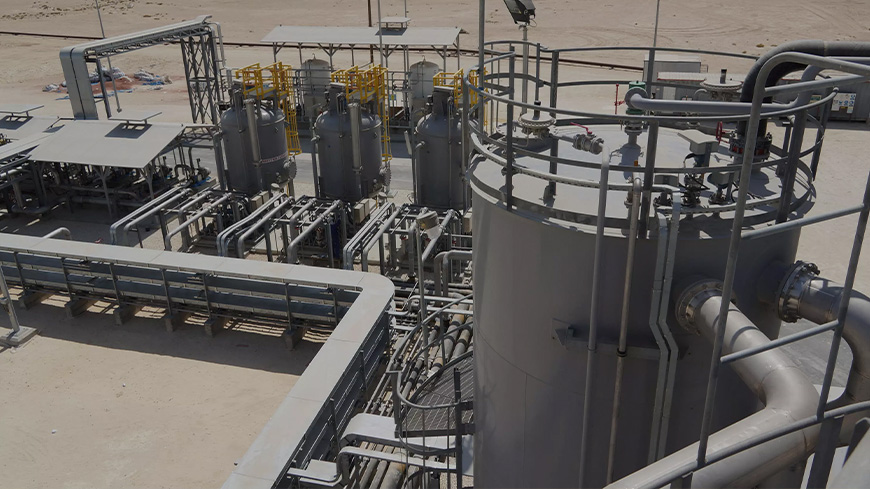
PAPEMP or PAPEMPA, is a chemical component used within water‑treatment formulations, preventing deposits and controlling dissolved metal ions. Due to its scale‑inhibition, chelation and dispersion properties, PAPEMP is a valuable component within the scope of water chemistry and operating conditions.
For industries seeking a PAPEMP manufacturer and supplier, gaining understanding regarding the functions and applications, plus technical requirements, of PAPEMP, is a vital first step.
Maxwell Additives offers PHOSPHOMAN®‑230, a product derived from Polyamino Polyether Methylene Phosphonic Acid, that can be used within water‑treatment formulations which demand scale control and mineral management.
What Is PAPEMP Polyamino Polyether Methylene Phosphonic Acid?
PAPEMP (Polyamino Polyether Methylene Phosphonic Acid) is a specialty organophosphonate chemical used within water treatment, and similar applications.
PAPEMP contains functional groups allowing to it bind with dissolved metal ions and prevent crystal formation. I see that depending on the mix of water and the formula PAPEMP helps stop deposits that would otherwise build up on equipment or process surfaces. It works by preventing those deposits from forming in the place. This means buildup, over time which keeps things running smoothly. The right mix makes a difference. It’s important to use the formula. This helps to keep the equipment clean and effective.
PAPEMP is also called PAPEMPA in the industry. The abbreviation can be different between suppliers and documents so buyers need to check that the PAPEMP name and the PAPEMP grade are the same as the technical data sheet, from the manufacturer.
Unlike a cleaning chemical, PAPEMP is primarily used for treatment, helping to manage scale‑forming minerals as part of a treatment program, rather than completely removing deposits from an existing system.
How Does PAPEMP Work within Industrial Water Treatment?
I find that PAPEMP performance depends on the water chemistry, dose, temperature, system design and other chemicals, within the treatment program. PAPEMP primary roles can be seen within the three mechanisms below.
1. Inhibition of Mineral Scale Formation
In water treatment there are often minerals like calcium and magnesium, in the water. When the water is heated or when it becomes more concentrated these minerals can create buildup on the surfaces.
PAPEMP, therefore, can help prevent the formation and growth of mineral crystals, reducing the likelihood of scale forming during operation.
PAPEMP effectiveness depends on the scale type, mineral level, pH, temperature and water‑treatment formulation.
2. Management of Dissolved Metal Ions
Certain metal ions can disrupt an industrial process. PAPEMP possesses chelation and sequestration capabilities for managing selected metal ions within systems.
This function can be advantageous, when a treatment formulation will need to address scale‑forming minerals, alongside other, dissolved, metals.
PAPEMP performance should be assessed against water mix and application requirements.
3. Dispersion and Control of Deposits
Scale management is not solely concerned with crystal formation; suspended particles and deposits can also be problematic, as they build or settle upon equipment.
PAPEMP, therefore, can possess dispersing capabilities, that can aid in managing mineral deposits within formulations. When mixed with treatment chemicals, PAPEMP may improve control of deposits, that affect industrial water systems.
The correct formulation and dose must be selected by testing, and not assuming that a single chemical will solve all water‑quality issues.
Key Benefits of PAPEMP, for Industrial Applications
PAPEMP usefulness is derived from its ability to assist mineral control within a water‑treatment program.
- Assistance with Control of Mineral Scale
PAPEMP prevents certain mineral deposits, such as calcium carbonate, calcium sulphate, and calcium phosphate scale. It is beneficial for systems, where mineral build‑up, affects equipment performance. - Support with Metal-Ion Management
PAPEMP chelation and sequestration capabilities can control metal ions, and is particularly beneficial where metal‑ion control, is a factor in the water‑treatment challenge. - Dispersion Properties
PAPEMP can spread mineral particles within formulations, assisting in deposit control, with scale‑inhibition. - Relevant to Demanding Water Conditions
PAPEMP can be used for applications within demanding water chemistry, such as hardness or alkalinity. Suitability must be verified against operating parameters. - Evaluation along with Other Treatment Chemicals
Industrial water‑treatment programs often comprise of phosphonates, polymers, corrosion inhibitors and other additives. PAPEMP can be evaluated as part of such a program, only, after compatibility testing.
The advantages of PAPEMP, are dependent upon the grade selected, the formulation used, the dosage and the operating conditions. Always verify claims, against the technical documentation.
Industrial Applications of PAPEMP
Industries can face different types of scale formation, and the following examples, illustrate where PAPEMP can be part of the treatment formulation.
1. Cooling Water Treatment
I have seen first-hand how cooling towers and systems that recycle water accumulate minerals as the water cycles through the system. As evaporation takes place, the minerals will become more concentrated. Should there be any scale buildup, this would lead to the formation of deposits on areas where there is heat transfer.
Use of PAPEMP is recommended in cooling water treatments in cases where mineral scale control and deposit management are important considerations in the program. Considerations in the treatment program will include hardness, alkalinity, temperature, cycles of concentration, and corrosion inhibitors.
2. Reverse Osmosis and Membrane Systems
Reverse osmosis systems utilise membrane technology, to separate dissolved substances from feedwater. As water flows through the system, minerals become concentrated in the retained stream, increasing the risk of scale formation.
PAPEMP may fit membrane‑treatment formulations, when its properties are compatible with the chemistry. However, not every PAPEMP grade is automatically suitable for every RO membrane system.
Before selecting a product, users must review membrane‑manufacturer guidance, feedwater analysis, recovery rate data, and the potential for calcium, sulphate, silica or other deposits.
3. Industrial Process Water
Manufacturing facilities are reliant on process water for production, operation of equipment, and heat transfer. Changes in quality, or operating, conditions, can introduce scale‑control needs.
PAPEMP can be evaluated, where phosphonate‑based mineral inhibition and dispersion are required. A suitable treatment programme should be centred on the process, rather than focussing on a standard dosage, across different facilities.
4. Oilfield Water Systems
Oilfield operations can utilise water with mineral compositions, and with varying pressure and temperature conditions. Mixing waters from sources can also increase the risk of mineral precipitation.
PAPEMP is utilised in some oilfield water‑treatment applications to support scale control. Its suitability for a given system, must be verified through water analysis, compatibility assessment and testing, under operating conditions.
5. Industrial Utilities and Desalination Processes
Industrial utilities and desalination processes, may see mineral deposition, when salts become concentrated. Scale management is important, as deposits can affect flow, heat transfer and process efficiency.
PAPEMP can be part of formulations, for selected applications, and product selection, must rely on the minerals, system conditions, treatment objectives, and equipment manufacturers recommendations.
PAPEMP vs. Other Phosphonate Chemicals
PAPEMP is one amongst the family of phosphonate‑based water‑treatment chemicals, and other products such as HEDP, ATMP and DTPMPA, have their application profiles and performance characteristics.
The correct choice, depends on the treatment objective and the conditions, in which the chemical will be used.
| Chemical | General consideration |
| PAPEMP / PAPEMPA | Considered for scale inhibition, metal‑ion management and dispersion, within formulations |
| HEDP | Commonly used for scale control and metal‑ion management, within water‑treatment programmes |
| ATMP | Used, within scale‑inhibition and water‑treatment applications |
| DTPMPA | Considered for scale control and chelation, within selected industrial water systems |
This comparison is a guide and not a performance ranking. No single chemical, is the choice for every application, and compatibility, water chemistry, dosage and product specifications, should decide the selection.
How to Choose A PAPEMP Manufacturer and Supplier
Choosing a chemical supplier involves more than a comparison of the quoted price, and other factors, including product consistency, documentation, technical communication and reliable delivery, all, affect long‑term purchasing decisions.
If evaluating a manufacturer and supplier, consider the following points.
Check Product Identity and Specifications
Confirm the chemical name, product grade, active content and other, relevant parameters, using the data sheet. Do not rely on the product name or a general, online description.
Review Quality Documentation
Request the data sheet, safety data sheet and batch‑specific certificate of analysis, where. These documents, will help the buyer, confirm the product, against the agreed specification.
Discuss the Intended Application
Explain whether the chemical is intended for cooling water, membrane treatment, industrial process water or another application. The supplier should clarify, the product information and identify any limitations, that need to be evaluated.
Consider Batch Consistency
Consistent product quality helps to maintain treatment programmes, for industrial users. Buyers, should be aware of the suppliers, quality‑control steps and how product batches are examined.
Evaluate. Communication
I know that packaging, lead times, order quantities, dispatch arrangements and communication, can all affect procurement planning. Choose a supplier, that can clearly explain, the aspects that are relevant to your order.
Confirm Compatibility Before Use
I remember that even if a product, appears to fit an application, its compatibility with chemicals and actual process conditions, must be checked. Laboratory testing and technical review, can help to reduce the risk of precipitation or treatment problems.
PAPEMP. Supplier in India: Maxwell Additives
I have seen Maxwell Additives Pvt. Ltd., located in Vadodara, Gujarat, provide specialty chemicals, for use that includes phosphonate-based water‑treatment products.
Its PHOSPHOMAN®-230 product, is linked to Polyamino Polyether Methylene Phosphonic Acid, also referred to as PAPEMP or PAPEMPA, PAPEMP is intended, for applications where properties such as scale inhibition, sequestration and dispersion, are relevant in the formulation.
I advise buyers, seeking a PAPEMP manufacturer and supplier, to confirm the grade and technical requirements, for the intended use. Product specifications, documentation, packaging, order quantity and supply timelines, should be discussed directly before placing an order.
To learn more about PAPEMP, visit the Maxwell Additives PAPEMP product page.
Conclusion
PAPEMP Polyamino Polyether Methylene Phosphonic Acid is a specialty phosphonate that can aid water‑treatment programmes with scale inhibition, metal‑ion management and dispersing properties. Application may suit cooling‑water systems, selected membrane‑treatment formulations, industrial process water and oilfield water systems.
However, picking the product requires than naming a chemical, and all aspects—including water chemistry, operating conditions, compatibility and current product specifications—must be considered, before deciding on a treatment programme.
For businesses seeking a PAPEMP manufacturer and supplier, Maxwell Additives offers PHOSPHOMAN®-230 for applications. Contact the company to discuss product specifications and check if the grade meets your needs.
Frequently Asked Questions About PAPEMP
1. What is PAPEMP?
PAPEMP stands for Polyamino Polyether Methylene Phosphonic Acid. I use PAPEMP as an organophosphonate within selected water‑treatment formulations, for scale inhibition, metal‑ion management and dispersion.
2. What is PAPEMPA?
PAPEMPA is another abbreviation for Polyamino Polyether Methylene Phosphonic Acid, and buyers should confirm the grade and product identity using the suppliers documentation.
3. What is PAPEMP used for?
I use PAPEMP, within selected applications that involve water treatment, cooling‑water systems, membrane‑treatment formulations and oilfield water systems. Suitability depends on the operating conditions and treatment needs.
4. Can PAPEMP help control calcium scale?
I have seen PAPEMP help block calcium‑based mineral deposits, such as calcium carbonate, calcium sulphate and calcium phosphate, under conditions. Performance depends on water chemistry, formulation and dosage.
5. Is PAPEMP for osmosis systems?
I have considered PAPEMP, for RO antiscalant formulations. The grade must be evaluated, in accordance with feedwater analysis, membrane needs, recovery rate and scale‑forming minerals.
6. How is PAPEMP different from HEDP or ATMP?
PAPEMP, HEDP and ATMP are chemicals possessing distinct properties and application profiles. I find that the best option, depends on water chemistry, treatment goal and compatibility with formulation ingredients.
7. How should PAPEMP dosage be determined?
I know that there is no dosage that fits every system and PAPEMP, dosage should be set, using water analysis, operating conditions, product specifications and proper testing or technical guidance.
8. What should buyers check before purchasing PAPEMP?
Buyers should review PAPEMP specification, active content, quality documents, batch consistency, packaging, supply arrangements and compatibility, with the intended application.
Related Posts